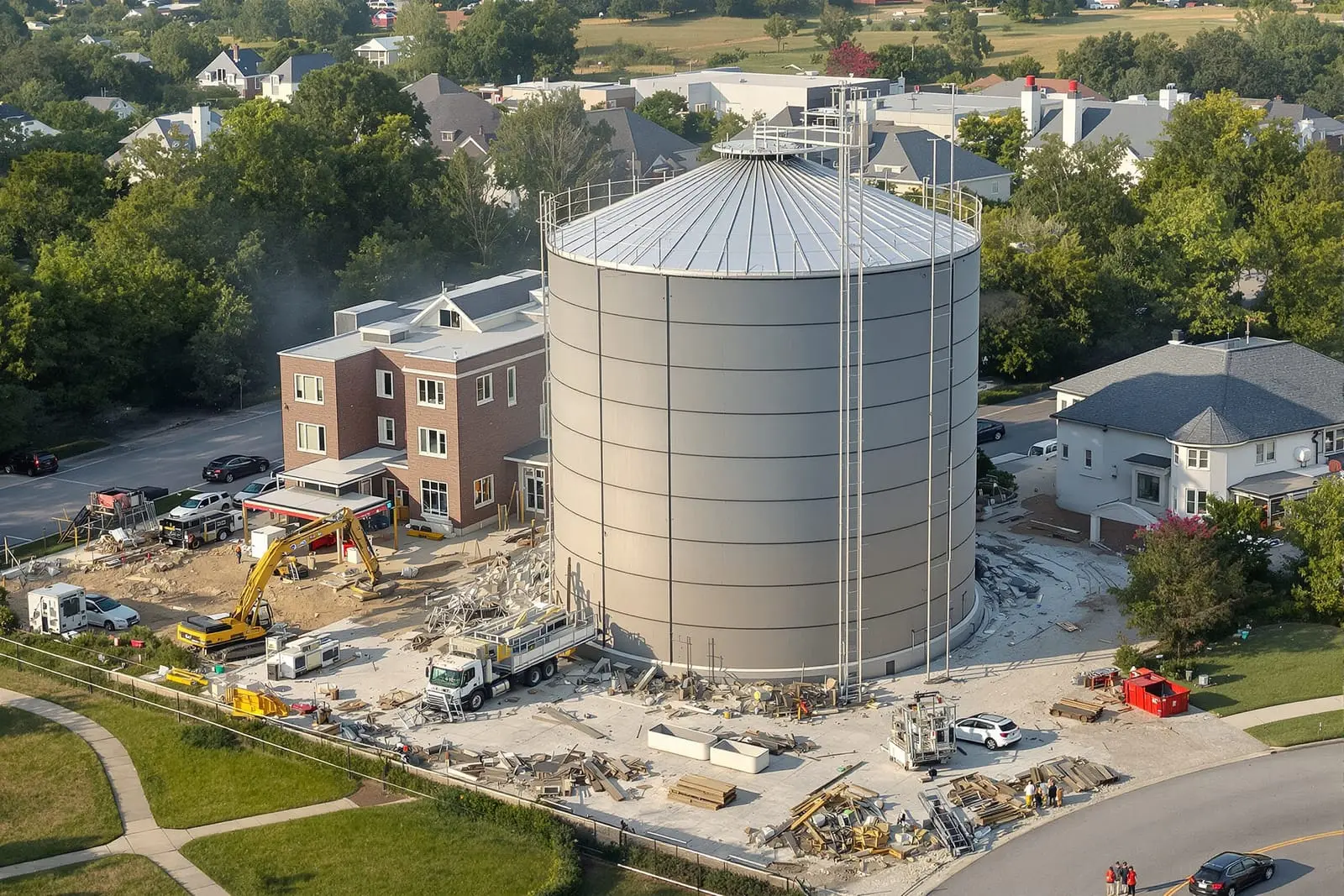
We specialize in tank, silo, and stack demolition in Denver, CO for industrial plants, farms, and utilities. Our crews cut, rig, and lower steel or concrete structures in controlled sequences to protect nearby buildings and equipment. Choose experienced specialists for complex vertical structure demolition.
Wrexo Demolition Denver provides professional tank demolition throughout Denver, CO and the surrounding area. Our licensed, insured crew delivers safe, clean, on-time work with a free estimate before anything begins. Call (720) 315-7877 or request your free quote.
Specialized Tank, Silo and Stack Demolition in Denver
Wrexo Demolition Denver focuses on the heavy structural work many contractors avoid: safe removal of tanks, silos, and stacks throughout the Denver metro area. We handle everything from fuel and chemical storage tanks in industrial yards to old concrete grain silos and decommissioned smokestacks at older plants.
Our crews live and work along the Front Range, so we understand Denver specific issues like tight urban alleys, mixed zoning near rail corridors, and changing weather that can affect crane and torch work. Whether your structure is tucked behind a brewery in RiNo or on open ground in Commerce City, we design a sequence that fits the site, the neighboring properties, and your schedule.
Every project starts with the same goal: remove the structure as efficiently as possible while protecting workers, neighbors, existing equipment, and utilities. From the first walk through to the final load out of scrap, your point of contact at Wrexo Demolition Denver keeps you updated so there are no surprises.
How We Approach Tank Demolition Projects
Tank demolition looks straightforward, but the safest projects are carefully staged. We begin with a detailed site visit. Our estimator documents the tank construction (vertical or horizontal, steel or fiberglass, single or double wall), measures dimensions, and checks access routes for trucks, roll offs, and cranes. We also identify any live lines, overhead power, or buried utilities that might influence the dismantling sequence.
Next, we verify what the tank held and what it currently contains. For petroleum, chemical, or process tanks, we coordinate with you and any environmental contractor involved to confirm cleaning, gas freeing, and product removal are complete. If you need help arranging those services, we can connect you with Denver area partners we trust.
With that information, Wrexo Demolition Denver prepares a method plan. Small tanks in clear areas might be rigged, lifted whole, and processed on the ground. Larger vertical tanks are typically cut into sections using torches or cold cutting tools so we control exactly how each piece comes down. In urban Denver locations we often top down the shell by removing roof sections, then cutting wall plates in manageable strips to keep noise and vibration to a minimum.
Throughout tank demolition work we manage hot work permits, fire watch, and spark containment where required. For sites in the city of Denver or nearby municipalities, we align start times and truck routes with local noise and traffic rules so your project stays compliant.
Silo Demolition: Concrete, Steel, and Grain Facilities
Silos around Denver come in many forms: concrete stave silos at older agricultural sites, slip formed reinforced concrete silos at grain elevators along I 70, and welded steel silos at feed mills and manufacturing facilities. Each style needs a different demolition strategy.
For reinforced concrete silos, we usually work from the top down using excavators with high reach or specialized attachments. Openings are created near the top, then the structure is progressively broken while guiding debris inward. This reduces the risk of uncontrolled outward collapse, which is crucial close to rail spurs, conveyors, or other occupied structures. Steel silos are commonly cut in bands and lowered, or segmented with torches and mechanical shears.
During planning we consider stored product residue and dust. Grain dust and some powders can be combustible, so Wrexo Demolition Denver evaluates whether dry removal, misting, or non sparking tools are needed in certain phases. We also plan for interior obstructions such as sweep augers, ladders, and platforms that can hang up debris if not removed early.
Concrete silo slabs and foundations are often substantial. We core or saw cut at strategic points to separate what must be removed from what can remain. Many Denver property owners want to reuse the pad for new equipment or a building addition, so we offer options for partial removal, surface leveling, or full breakout with rebar separation for recycling.
Stack and Chimney Removal for Industrial and Commercial Sites
Stacks and chimneys create unique risks because of height, slender design, and proximity to roofs and process equipment. Around Denver we see many types: brick stacks at older industrial buildings, steel stacks on boiler houses, and concrete stacks at energy or manufacturing facilities. Wrexo Demolition Denver selects the method based on structure type, condition, and working room.
Where access allows, we often use a top down approach with a man basket or mast climber, removing liners and shell materials in rings. Brick and concrete are broken and dropped down the interior whenever possible to contain debris. For steel stacks we usually rig and cut in segments, lowering each section with a crane to a laydown area for processing.
In constrained urban locations, full mechanical felling is usually not an option. Instead, we stage smaller lifts, design temporary guying or bracing if needed, and time critical picks for low wind windows. We also coordinate with neighbors and building occupants in downtown or campus like settings so they understand noise and access changes during the work.
Stack demolition often exposes roof or wall openings that must be weather tight before we leave. Our crews install temporary caps, plates, or covers so your facility is protected until permanent repairs or new equipment installations are completed.
Permits, Safety, and Environmental Considerations in Denver
Removing tanks, silos, and stacks touches several regulatory areas. Wrexo Demolition Denver helps you navigate local expectations so the job does not stall mid project. For structures inside the city and county of Denver, we confirm whether a demolition permit, structural permit, or only a trade level permit is required, and we can coordinate with your design professionals if engineering sign off is needed.
Before physical demolition, we verify hazardous material requirements. Many older stacks and tanks have lead paint, asbestos containing insulation, or mastic around bases and penetrations. We recommend an asbestos and hazardous materials survey for certain vintage facilities and can schedule this with local consultants if you do not have one in place. Any abatement needed is performed prior to our heavy work starting.
On active industrial sites, we participate in your safety orientation and adapt to site specific rules, such as confined space procedures for tank entry or hot work in process areas. Our own safety planning covers fall protection, rigging plans, exclusion zones, equipment inspections, and emergency response steps. You receive a copy of the site specific safety plan so your internal EHS team can review it.
Stormwater and dust control are important across the Front Range. We plan water use and containment when washing or cutting concrete, and in some cases use misting rather than open hoses to limit runoff. Scrap metals and concrete are sorted on site to minimize landfill disposal and to create credit opportunities where scrap volumes are significant.
What Affects the Cost of Tank, Silo and Stack Demolition
Pricing this type of work is more involved than a simple structure tear down. Several factors can increase or decrease your cost, and understanding them helps you plan your budget and timing.
Structure size and access are usually the biggest drivers. A small vertical tank in an open yard with truck access might be removed in a day with minimal equipment. The same volume tank shoehorned between buildings in central Denver, with overhead power, may require crane mobilization, detailed torch work, and multiple short shifts to avoid production shutdowns, all of which add to costs.
Previous contents and cleaning status also matter. Tanks that once held flammables, caustics, or specialty chemicals often require gas testing, additional venting, and more controlled cutting methods. If sludge or product remains, we may have to sequence demolition around cleaning activities, or design a way to safely remove internal product during dismantling, which adds labor and disposal.
Material type can offset some costs. Steel tanks, silos, and stacks generate recyclable scrap, which can create a credit on your invoice for larger volumes. Concrete structures cost more to break and haul but may be crushed and reused as base material, either on your site or by local recyclers. Wrexo Demolition Denver explains these options during estimating so you know where savings are possible.
Schedule constraints are another factor. Nights, weekends, or strict outage windows often require additional staffing or phasing. If your facility needs us to work only during shutdowns, we can build an accelerated plan with clear milestones so the plant is back online when you need it.
Planning Your Project With Wrexo Demolition Denver
The most successful tank, silo, and stack demolition jobs start with a clear scope and realistic timeline. When you contact Wrexo Demolition Denver, we begin with questions about your facility, structure type, and end goal. Are you removing just the structure, or do you want foundations, underground lines, and associated catwalks and platforms removed too? Will the area become parking, new equipment pad, or green space?
We typically schedule a site visit within a few business days anywhere in the Denver metro and nearby areas like Aurora, Lakewood, Thornton, and Brighton. After the visit, you receive a written proposal that outlines our demolition method, what is included, how materials will be managed, anticipated duration, and any assumptions about permits or environmental work. This helps you compare our plan with other bids on more than just price.
Once approved, we lock in a start date, coordinate utility locates, and submit any agreed permit applications. Before mobilizing, our superintendent walks the site again with you to confirm any production schedules, traffic patterns, or neighbor concerns that changed since the estimate. During demolition, you have direct access to our project lead, not a call center.
When work is complete, we handle final clean up, load out, and, if requested, provide weight tickets for scrap and debris along with disposal documentation. Our goal is straightforward: when Wrexo Demolition Denver leaves, you have a clear, safe area that is truly ready for whatever you plan to build next.
“
Professional tank, silo and stack demolition, done right the first time, quality materials, honest pricing, and results that last.
Wrexo Demolition Denver
Tank, Silo and Stack Demolition Across Our Service Area