Home › Mobile Home and Manufactured Home Demolition
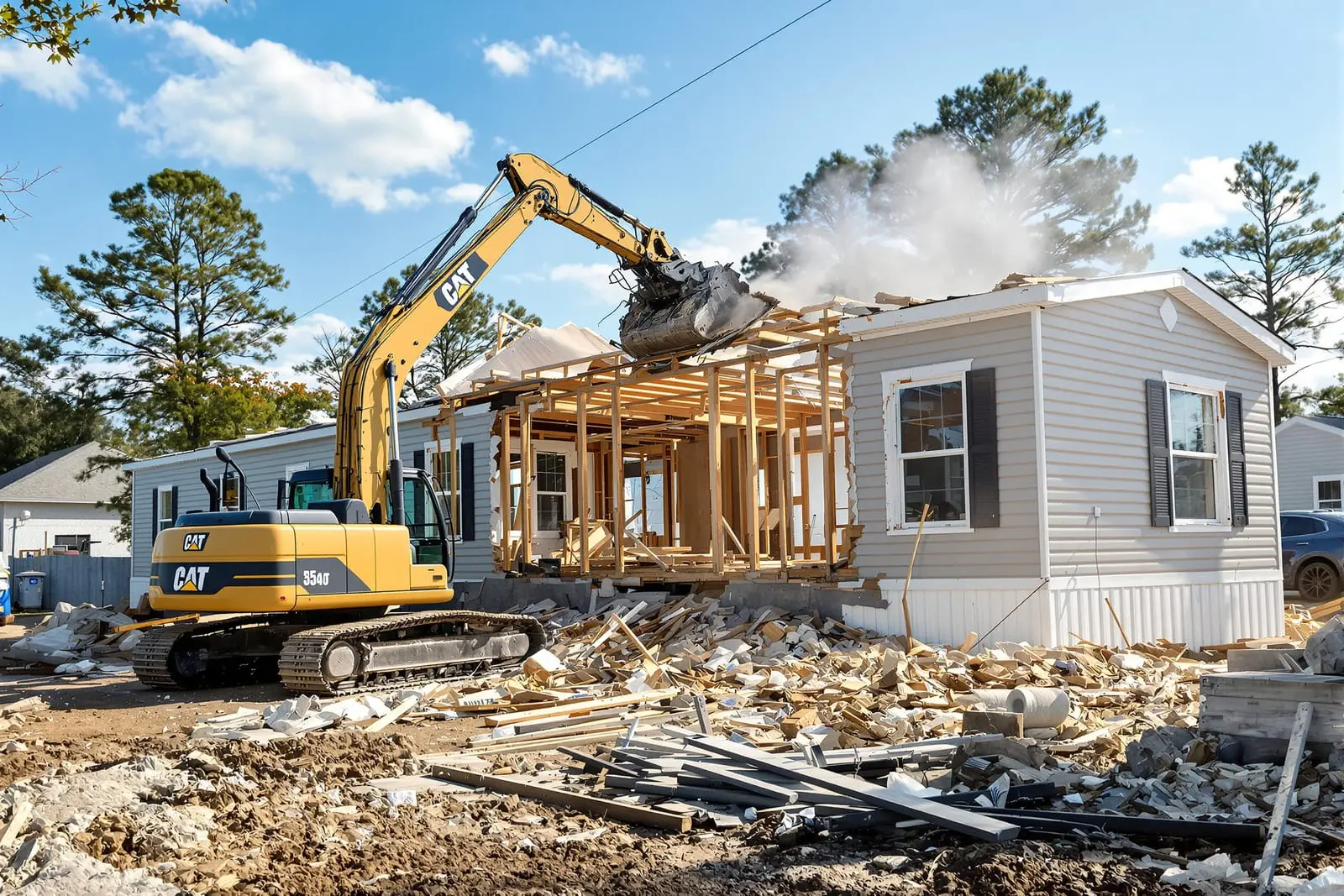
Our team provides mobile home and manufactured home demolition in Denver, CO for parks, private lots, and rural properties. We disconnect utilities, remove skirting and tie downs, then safely dismantle or crush the home for hauling. Count on us to leave the pad or lot clean and ready for its next use.
Wrexo Demolition Denver provides professional mobile home demolition throughout Denver, CO and the surrounding area. Our licensed, insured crew delivers safe, clean, on-time work with a free estimate before anything begins. Call (720) 315-7877 or request your free quote.
Mobile Home Demolition in Denver Done the Right Way
Wrexo Demolition Denver handles mobile home and manufactured home demolition for property owners who want the job done cleanly, safely, and on schedule. We work across the Denver metro area, including older parks, rural lots on the outskirts, and tight city properties with limited access.
Mobile homes and manufactured units are built very differently from stick-built houses. They often sit on steel chassis with axles, have skirting that hides utilities, and may be tied down to concrete piers or a slab. That design changes how we dismantle them, how debris is sorted, and how utilities must be capped. Our crews are used to dealing with layered roofing, aluminum siding, particleboard, and older plumbing and electrical systems that do not match current code.
If you want to clear a lot for a new modular, a custom home, or simply eliminate an abandoned or unsafe unit, we manage the entire demolition process from permitting to final haul-off. You get one point of contact at Wrexo Demolition Denver, straightforward pricing, and a clear plan before equipment ever touches your property.
How Mobile Home Demolition Actually Works On Site
Before any physical work begins, we confirm utilities are properly disconnected. In the Denver area this means coordinating with Xcel Energy or your local provider to shut off and lock out power and natural gas, and verifying water and sewer are capped at the main or septic connection. We never start demolition based only on a verbal assurance. We require written confirmation or our own meter checks where possible.
Once utilities are safe, our crew strips useful or hazardous components before heavy equipment comes in. This often includes removing skirting, stairs, decks, porches, window AC units, propane tanks, and sometimes roof-mounted swamp coolers that are common on older Denver mobiles. Appliances, water heaters, and HVAC components are pulled for recycling or special disposal.
After soft strip, we typically use a mid-size excavator with a hydraulic thumb to crush and fold the structure in a controlled way. On very tight sites, such as older mobile home parks in Denver and Aurora, we sometimes cut the home into sections with saws and nibble it down piece by piece to avoid damaging neighboring units, fences, and utilities. Floor systems and chassis are separated so that metal framing, copper wiring, and steel axles can be sent to a recycler instead of a landfill.
Debris is loaded into roll-off dumpsters or high-sided trucks as we go, not left to pile up. We then remove or flush-cut anchor systems, piers, and remaining footings. Finally, we rough grade the pad so it is usable for the next step, whether that is a new manufactured home installation or a full site redevelopment.
What Drives the Cost of Mobile Home Demolition in Denver
The price of mobile home demolition in Denver is shaped by several specific factors that we go over with you in detail before work starts. Size is the obvious one. A single-wide still on its axles is much faster to remove than a large multi-section manufactured home with attached porches and additions that were stick-built over time.
Access can raise or lower cost significantly. If our trucks and excavators can reach the home directly from a paved street and stage dumpsters nearby, labor and equipment time drop. If the unit is behind other homes, up a narrow alley, or only reachable by crossing a neighbor's lot, the job takes more planning, sometimes smaller equipment, and more hand work.
Hazardous materials can affect cost too. Many pre-1980 units in Denver still contain suspect flooring, mastic, or insulation that could involve asbestos. If we see warning signs during our site visit, we will recommend testing before demolition. If asbestos is found, we coordinate licensed abatement instead of disturbing it with machines, which protects everyone and keeps you compliant with Colorado regulations.
Dump fees along the Front Range are another real cost driver. Because mobile homes contain a mix of wood, metal, and composite materials, we keep your price down by separating metals and clean recyclables from general debris. The more we can recycle, the less you pay in disposal.
Permits, Regulations, and Park Rules in the Denver Area
In the City and County of Denver, tearing down a mobile or manufactured home is still considered a form of structure demolition. That usually means a demolition permit, proof of utility disconnects, and sometimes notification to adjacent property owners, especially in dense parks. Wrexo Demolition Denver can handle that paperwork or work with your contractor if you already have one.
Outside Denver, different municipalities such as Lakewood, Thornton, or unincorporated Arapahoe or Adams counties can have different rules. Some mobile home parks also have their own removal requirements that go beyond city code. Examples include specific working hours, mandatory use of certain access roads, or rules about dust and noise near occupied units. We contact the park manager or HOA ahead of time so there are no surprises on demolition day.
For older units connected to private septic systems or wells, we verify county environmental health rules before disturbing tanks or lines. In some cases the tank must be pumped and abandoned according to code if you plan to change how the property is used after the demolition.
If you are planning to install a new manufactured home or build a permanent house, the way we finish the demolition can affect future permitting. For example, some jurisdictions want footing remnants removed, others allow them to remain if they are below a certain depth. We match our work to your future plans so you are not paying twice to fix something later.
Timing, Weather, and Site Conditions in Denver
Front Range weather has a real impact on scheduling mobile home demolition. Frozen ground in mid-winter can make it difficult to pull piers and cleanly remove underground tie-downs, while spring snow and rain can turn bare lots into mud pits that our trucks sink into. When possible, we recommend scheduling non-emergency demolitions between late March and early November, when the ground is workable and access is more reliable.
High winds are another Denver reality, especially on exposed lots near the plains. Lightweight debris such as insulation, paneling, and roofing can travel quickly if not contained. On windy days, we adjust our workflow, keeping demolition sections smaller, loading debris directly into containers, and in some cases setting up temporary barriers so neighboring homes, yards, and vehicles do not get hit.
If your site is in a wildfire-prone fringe area on the west or south sides of the metro, we also pay attention to fire danger and temporary restrictions on certain equipment. In dry spells there may be rules about hot work like cutting torches or about idling heavy equipment on tall grass. We plan around those so your project stays legal and safe.
Snow does not stop us automatically, but it can hide debris, utilities, and trip hazards. If a storm hits right before your scheduled date, we may recommend a short delay so we can see what we are doing and avoid damaging buried lines or leaving hidden debris in the soil.
What You Should Do Before Demolition Day
There are several steps you can take to save time, reduce cost, and avoid conflict with neighbors or park management before we arrive.
First, remove all personal belongings, furniture, and trash from inside the home. Demolition is not a cleaning service. Every load of loose household waste drives up disposal fees. If you want help with that, let us know and we can quote additional labor or coordinate a temporary dumpster ahead of time.
Second, identify anything you want to keep before our crew starts, such as sheds, carports, fences, or concrete pads. Tell us clearly what stays and what goes, and we will mark them on a site map or with visible paint. Miscommunication at this stage is how patio slabs or mature trees get removed when you wanted them kept.
Third, handle access. Move vehicles, trailers, and equipment away from the work area. If you are in a mobile home park, confirm with management where our trucks can park and stage, and whether nearby residents should be notified of the schedule. This helps avoid complaints and delays.
Finally, think about what happens after demolition. Are you planning to bring in a new manufactured unit, pour a new foundation, or turn the space into open land or parking? Wrexo Demolition Denver can adjust grading, leave a compacted pad, or strip topsoil to match your next step, often more cheaply than bringing equipment back later.
“
Professional mobile home and manufactured home demolition, done right the first time, quality materials, honest pricing, and results that last.
Wrexo Demolition Denver
Mobile Home and Manufactured Home Demolition Across Our Service Area