Home › Emergency and Disaster Residential Demolition
We provide emergency residential demolition services in Denver, CO when homes are damaged by fire, storms, or structural failure. Our team responds quickly to make sites safe, coordinate with insurers and inspectors, and remove unstable structures. Protect your family and neighbors with prompt, controlled disaster demolition.
Wrexo Demolition Denver provides professional emergency demolition services throughout Denver, CO and the surrounding area. Our licensed, insured crew delivers safe, clean, on-time work with a free estimate before anything begins. Call (720) 315-7877 or request your free quote.
Emergency & Disaster Residential Demolition in Denver
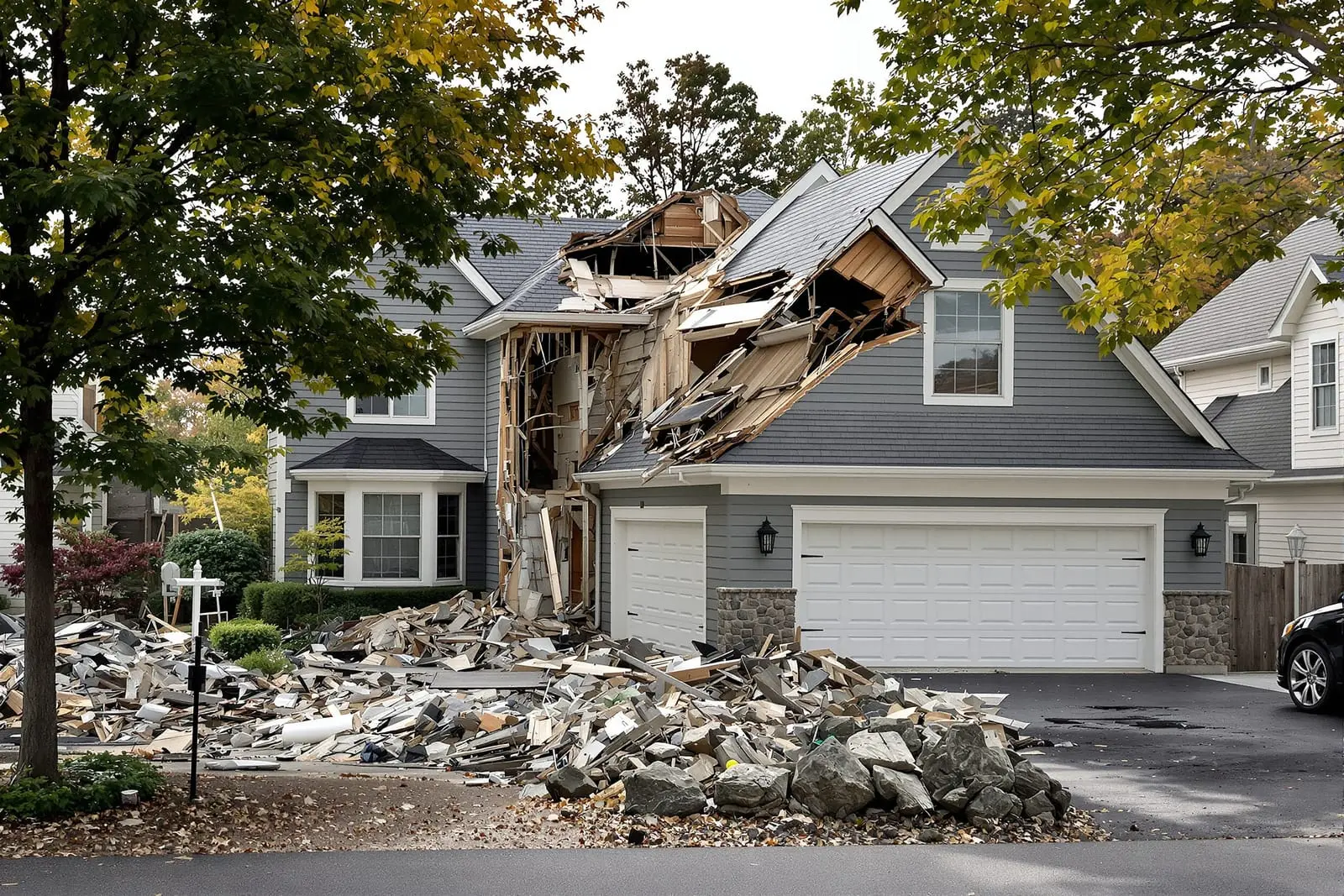
When a home is damaged by fire, flood, structural failure, or a vehicle impact, you often cannot wait weeks for help. Wrexo Demolition Denver provides rapid emergency demolition services focused specifically on damaged residential structures in the Denver metro area. Our crews are used to working in unstable, partially collapsed homes and coordinating with fire departments, building inspectors, and insurance adjusters.
Emergency demolition is not just knocking things down. It is a controlled removal of unsafe portions of a home so that the rest of the structure, the neighboring properties, and the people on site stay protected. Depending on the situation, we may perform partial structural demo, selective interior tear outs, or a complete teardown of a home that cannot be salvaged.
Because Denver weather can change quickly, we plan every emergency project for wind, snow, freeze and thaw cycles, and heavy summer storms. Our approach is to secure the site the same day, create a clear demolition plan that the city can approve quickly, and remove hazards fast so you can move on to repairs or rebuilding.
How Our Emergency Response Works (First 24 to 72 Hours)
When you contact Wrexo Demolition Denver for emergency demolition services, we start with a structured response process designed for speed and safety.
1. Phone triage and photos: We gather basic information about the damage, utilities, access issues, and any active hazards. If possible, you text or email photos so our estimator and safety lead can assess the situation before arrival.
2. Site stabilization: Once on site, our first priority is to make the area safe. We verify that gas, power, and water are shut off or properly capped. We install caution tape and temporary fencing if needed. For fire or storm damage, we identify loose structural elements that could fall and secure or remove them.
3. Structural evaluation and demo plan: We walk the property with you and, when required, with the local building inspector, fire marshal, or engineer. We decide which parts of the home must be removed immediately, which can be temporarily braced, and which can be preserved for future repairs. From that, we produce a written demolition plan that meets Denver code.
4. Coordination with authorities and insurance: For most emergency and disaster residential demolition projects, we coordinate with your insurance adjuster by documenting damage with photos and video before and during demolition. We also handle emergency permits with the City and County of Denver or surrounding jurisdictions so the work remains compliant.
5. Initial demolition and debris removal: Within that first 24 to 72 hour window, we begin carefully dismantling unsafe portions of the structure, separating materials that may require special handling, and clearing debris so restoration or reconstruction contractors can access what remains.
Types of Disaster Damage We Handle in Denver Homes
Emergency demolition work in Denver often follows specific local types of residential damage. Wrexo Demolition Denver has field experience with each of these scenarios and tailors the demolition scope to match.
Fire and smoke damage: For house fires, the structure often looks solid from the outside but has charred framing, compromised floor systems, and brittle brick or block. We remove collapsed roofs, weakened attic trusses, and fire damaged floors, and in many cases perform selective demolition so undamaged areas can be rebuilt instead of fully torn down.
Water and flood incidents: Burst supply lines in winter, failed water heaters, and firefighting water can saturate framing and drywall. In basements and garden level units, Denver’s freeze and thaw cycles can worsen cracks after a flood. We strip out wet drywall, insulation, flooring, and sometimes subfloor and joists so the structure can dry out and mold does not take hold. If foundation movement or wall bowing is present, we work with engineers to remove unsafe sections.
Vehicle and tree impacts: Along busy streets and during strong Front Range windstorms, vehicles and large trees sometimes strike homes. This can shear off corners, collapse walls, or push roofs off alignment. We perform precise structural cuts, temporary shoring, and staged removal so the impact area is dismantled without pulling down the rest of the home.
Storm and snow load failures: Heavy spring snow or wind uplift can cause roof collapses and porch failures. We remove folded or caved in roof sections, compromised rafters, and collapsed decks while protecting intact portions with temporary weather protection so further moisture damage is limited.
Step by Step: How Emergency Residential Demolition Is Performed
Every emergency project follows a clear sequence so that nothing critical is missed while we work under time pressure.
Site assessment and mapping: We document the damaged structure inside and out, noting load bearing walls, utilities, stair locations, and any previous additions. In older Denver neighborhoods, we pay special attention to mixed construction such as brick with wood framing or older clay sewer lines.
Utility control and environmental checks: Before any heavy work begins, Wrexo Demolition Denver confirms utility shutoffs with the providers. We check for asbestos containing materials and lead based paint, which are common in Denver homes built before the 1980s. If present, we integrate required abatement or specialized handling into the demolition sequence.
Shoring and temporary support: In partially standing homes, we often install temporary shoring under sagging beams, floor sections, or roof lines. This prevents sudden collapse while we remove specific pieces of structure.
Selective or structural removal: Using saws, compact excavators, skid steers, and hand tools, our crew removes damaged structural members in planned order. We typically start at the top or outermost damaged areas and work inward so debris does not trap workers or damage salvageable sections. Where necessary, we cut structural connections cleanly so the remaining home is square and ready for reconstruction.
Sorting and loading debris: Concrete, brick, metals, and clean wood are separated when feasible so disposal costs are managed and materials can be properly recycled. Disaster waste often contains insulation, burned material, drywall, and contents, so our team follows Colorado and city guidelines for handling mixed and potentially contaminated debris.
Final safety sweep: Once demolition is complete, we perform a walk through to remove protruding nails, sharp edges of metal, and hidden trip hazards. We leave the site in a condition that allows adjusters, engineers, and builders to walk safely and take measurements.
Costs, Insurance, and What Drives Your Emergency Demolition Price
Homeowners in crisis need clear expectations about cost. Wrexo Demolition Denver explains pricing upfront and ties it to specific site conditions so your insurance carrier understands the scope.
Main factors that affect cost:
Extent of structural damage: Removing a single collapsed garage wall costs far less than tearing down a fire gutted two story home. If the home must be fully demolished to the foundation, equipment time and hauling volumes increase.
Access and site constraints: Tight city lots, alley only access, overhead power, and neighboring historic homes can slow work and require smaller equipment or more hand demolition. This usually raises labor time and debris loading costs.
Hazardous materials: Asbestos, lead paint, or fuel contamination from garages or workshops require special containment, packaging, and disposal. These regulated steps add both time and disposal fees.
Debris volume and disposal: Disposal in the Denver area is charged by weight and type of material. A burned home with heavy plaster and tile will cost more to haul and dump than a light frame structure with mostly wood and drywall.
Emergency timing: Night, weekend, or immediate response projects may include an emergency mobilization fee to get crew and equipment on site quickly.
Insurance coordination: We routinely provide detailed line item estimates, photo logs, and debris tickets to support insurance claims. This helps you secure fair coverage for necessary emergency demolition and can reduce out of pocket surprises.
Local Codes, Permits, and Weather Timing in Denver
Emergency and disaster residential demolition has to comply with local requirements even when time is critical. Wrexo Demolition Denver is familiar with city and county processes across the metro area and builds them into the schedule instead of letting them cause delays.
Permits and inspections: In most cases, complete or partial structural demolition in Denver requires a demolition permit. For urgent safety conditions, the city may allow expedited processing or emergency approvals once a structure is documented as unsafe. We prepare site plans, utility disconnect letters, and structural descriptions and submit them on your behalf.
Historic and special districts: Some Denver neighborhoods and older homes are subject to historic review. In a disaster situation, there are specific pathways to secure permission to remove unsafe portions while still respecting preservation rules. We coordinate with the city so you are not blindsided by stop work orders.
Weather and seasonal considerations: Winter work often means frozen ground, icy access paths, and short daylight. We schedule around extreme cold snaps to avoid equipment failures and to keep our crew safe. In spring and early summer, Denver’s heavy, wet snows and sudden thunderstorms mean we plan for mud control, slope stability around foundations, and quick tarp or shrink wrap protection over exposed areas that will remain.
Neighbor and street impacts: For tight residential streets, we manage temporary parking and road use for roll off dumpsters and equipment. This reduces friction with neighbors and limits the risk of damage to adjacent structures, fences, or landscaping.
Why Homeowners Choose Wrexo Demolition Denver in a Crisis
In an emergency, experience and preparation matter more than slogans. Wrexo Demolition Denver focuses specifically on complex residential situations where structures are unstable, families are displaced, and response time is critical.
Residential focus: Our crews are trained for working inside and around occupied neighborhoods, with shared driveways, children, pets, and tight property lines. We protect neighboring homes with plywood barriers, debris netting, and careful machine operation.
Fast, organized communication: You get a single point of contact who explains each step, coordinates with your adjuster, and keeps you updated on what will happen next. We know you are already dealing with stress and paperwork, so we keep our side as simple as possible.
Coordination with your rebuild: We regularly coordinate with restoration contractors, engineers, and custom home builders. By cutting structural elements square, preserving agreed upon areas, and documenting what we remove, we help your rebuild team move faster and avoid unexpected structural surprises.
If you need emergency demolition services anywhere in the Denver metro area, Wrexo Demolition Denver is ready to respond, secure the site, remove dangerous structures, and give you a safe starting point for rebuilding your home.
“
Professional emergency and disaster residential demolition, done right the first time, quality materials, honest pricing, and results that last.
Wrexo Demolition Denver
Emergency and Disaster Residential Demolition Across Our Service Area