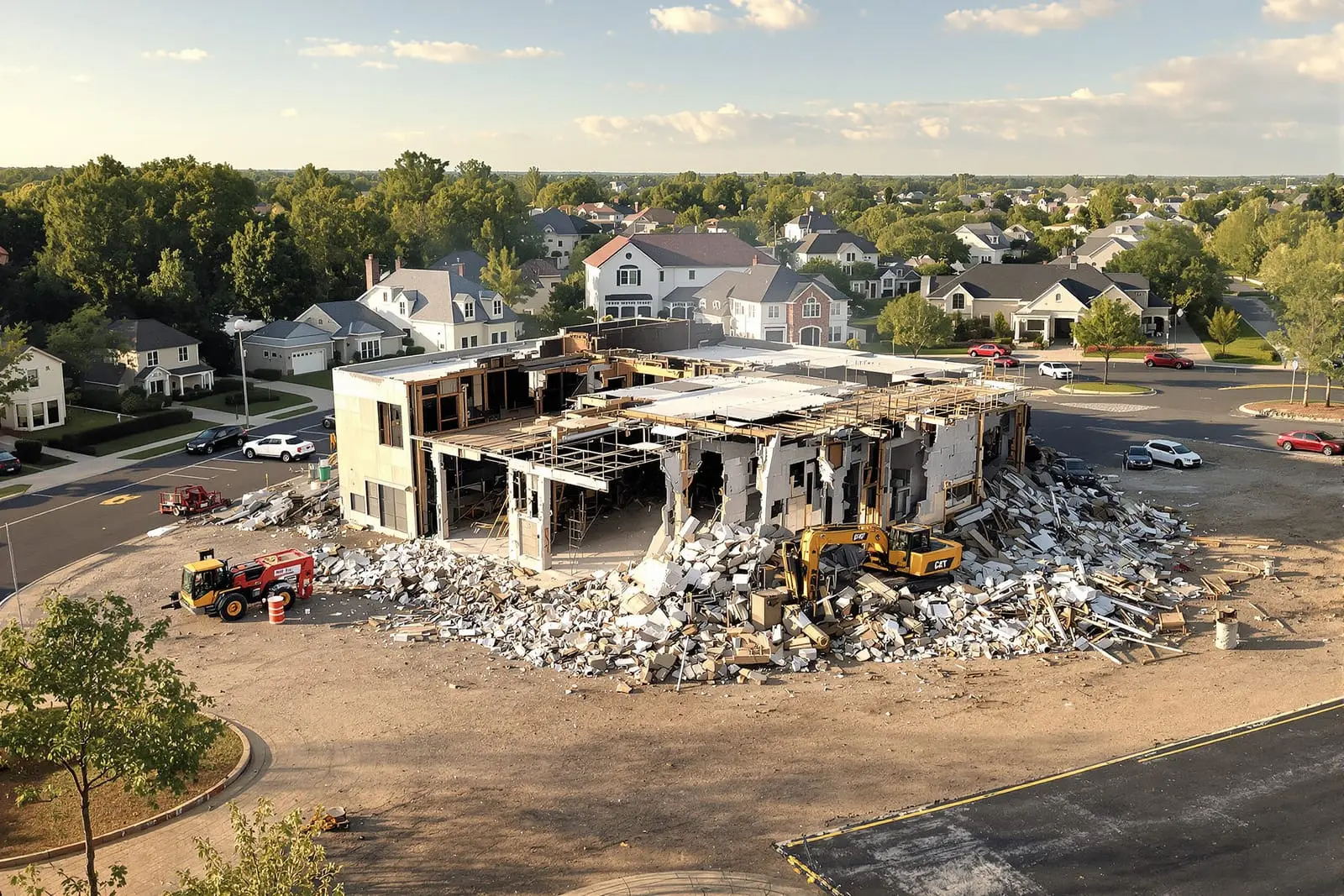
We coordinate explosive and implosion demolition in Denver, CO for large or hard to access structures. Working with licensed blasting engineers, we plan charge placement, exclusion zones, and debris management to bring buildings down safely in tight sites. Choose an experienced partner for complex implosion projects.
Wrexo Demolition Denver provides professional implosion demolition throughout Denver, CO and the surrounding area. Our licensed, insured crew delivers safe, clean, on-time work with a free estimate before anything begins. Call (720) 315-7877 or request your free quote.
Explosive and Implosion Demolition in Denver, Done the Right Way
Implosion demolition is not a stunt, it is a precise engineering method that uses carefully placed explosives to make a structure fall into a planned footprint. At Wrexo Demolition Denver, we use explosive and implosion demolition only when it is the safest and most efficient option for a particular site in the Denver area.
Not every building is a candidate for implosion. Before we ever talk charges or timelines, we look at the structure type, the framing system, the foundation, and what sits within about a 500 to 1,000 foot radius. Downtown Denver sites near light rail, historic buildings, LoDo warehouses, or dense mixed‑use blocks typically require tight vibration and dust controls. Industrial sites along I‑70 or in Commerce City often have more room to work and different priorities, like protecting nearby utilities or active production lines.
Explosive demolition is most often used on tall or heavily reinforced structures where mechanical equipment would be slow, dangerous, or disruptive. That includes high‑rise concrete frames, old smokestacks, stadium components, silos, and obsolete industrial towers. Our team weighs whether an implosion really reduces overall risk and cost once you add in engineering, permitting, street closures, and cleanup.
When implosion is not the right fit, we say so plainly and recommend alternative methods like high‑reach mechanical demolition. Our goal is not to sell an explosion, it is to deliver the safest takedown method for that specific Denver property and neighborhood.
How Implosion Demolition Actually Works
A successful implosion looks simple from the outside, but there is a lot happening beforehand. Wrexo Demolition Denver follows a step‑by‑step process that is dialed in for Colorado structures and soil conditions.
First comes structural analysis. Our engineers review original drawings when available, then verify conditions on site. We map out columns, beams, shear walls, and stair or elevator cores. Many older Denver buildings have been altered over time, so we physically open walls and cores to confirm what holds the building up now, not just what was drawn fifty years ago.
Next, we design the blast sequence. The idea is to weaken key supports in a specific order so gravity and the building's own weight do most of the work. Charges are placed in holes drilled into selected columns or walls. Bracing, pre‑cutting, and saw cuts are used to direct how floors break and fold. We model the collapse path, then engage a licensed blasting engineer to review and stamp the plan.
We then handle charge selection and placement. For reinforced concrete, we typically use shaped charges or linear cutting charges sized to the bar diameter and spacing. For steel, we may use linear shaped charges that slice through flanges and webs. Charge weights are calculated for each point, then adjusted for altitude and typical Denver winter or summer temperatures, which can affect explosive performance.
Finally comes timing. Detonators are sequenced in milliseconds, typically starting with interior supports, then working outward. The timing pattern controls whether a building folds inward like a zipper or rolls in a specific direction away from critical neighbors. Every detonator and firing line is logged and checked multiple times. Only when walk‑downs, weather checks, and all safety conditions are satisfied do we fire.
Planning, Permits, and Denver‑Specific Considerations
Implosion demolition in Denver involves more than a demolition contractor and an engineer. You are coordinating with the City and County of Denver, local fire departments, utilities, nearby property owners, and sometimes state or federal agencies.
Permitting starts well before any explosive is on site. Wrexo Demolition Denver works with you and your design team to assemble the package needed for Denver Community Planning and Development, Fire Prevention, and Building departments. This usually includes structural reports, blast calculations, site logistics plans, dust and debris control plans, and a detailed public safety strategy. For projects in the downtown core or near transit, we also coordinate with Denver Public Works and RTD for road closures and train service protections.
Scheduling is affected by Colorado's climate. Winter can be a good time for implosions because vegetation that might catch dust is dormant and there is less thunderstorm activity. However, extreme cold can affect hoses, pumps, and misting systems, so we plan extra protection against freeze‑ups. Spring is often windy along the Front Range, which can complicate dust control and may trigger rescheduling if wind speeds exceed agreed limits toward residential areas. We monitor weather closely and build contingency dates into the schedule.
Neighborhood communication is another Denver‑specific concern. Many explosive demolition sites are near mixed commercial and residential blocks. We help organize public notices, door hangers, stakeholder meetings, and Q&A sessions so neighbors understand what to expect, when they will hear sirens, how long streets will be closed, and what we are doing about dust and vibration. This preparation greatly reduces complaints and delays.
Utilities and buried infrastructure are critical too. Older Denver neighborhoods may have undocumented lines. Before implosion, we coordinate utility locates, temporary cutovers, and protection of water, gas, fiber, and electric services. If the site is near the South Platte River or a major storm line, we include measures to keep debris and fine material out of waterways and drainage structures.
Safety, Dust, Debris, and Vibration Control
Public safety is the first measure of a good implosion. A dramatic collapse with no injuries and no surprises is the target. Wrexo Demolition Denver builds multiple layers of protection into every explosive and implosion demolition project.
The controlled exclusion zone is where we start. Based on blast energy and structure size, we define a perimeter where no public access is allowed during firing. That perimeter may require temporary relocation of residents or businesses for a few hours. We coordinate this with local authorities and property managers well in advance so there are no last‑minute surprises.
To manage flying debris, we use a combination of pre‑demolition stripping, heavy‑duty blast mats, geo‑textile fabric wrapping, and sacrificial shielding walls. Nonstructural materials like glass, roofing, and brittle façade elements are often removed ahead of time so they do not become projectiles. Columns with charges are wrapped and sometimes boxed with timber or steel to contain fragments.
Dust control is a serious issue at Denver elevations where dry air is common. We do more than just turn on some hoses. Our plans typically include pre‑wetting of the structure, strategically placed water cannons, misting systems, and in some cases foam application to trap fines. Air monitoring stations around the site measure particulate levels. If the building has asbestos or lead paint history, all abatement is completed before implosion and any remaining suspect materials are either removed or encapsulated in accordance with Colorado Department of Public Health and Environment rules.
Vibration management protects nearby structures, including Denver's many historic brick buildings and older unreinforced masonry. We install seismographs at agreed locations before test blasts and the main event. Limits are set based on building age and type. If trial shots indicate we are close to a threshold, we can adjust charge weights or timing sequences to reduce peak particle velocities. After the implosion, we inspect adjacent buildings, manholes, and utilities for movement or cracking and document findings for owners.
Costs, Timelines, and How Wrexo Demolition Denver Helps You Decide
Implosion demolition can save time and money on the right project, but it is not automatically the cheapest option. The cost picture in Denver depends on several specific factors.
Key cost drivers include building height, structural materials, amount of reinforcing steel, proximity to occupied buildings, the number of utilities that must be protected, traffic control needs, and environmental conditions such as asbestos or contaminated soils. Tall, isolated concrete structures often see a net savings with implosion compared to months of mechanical demolition. Dense urban sites might have higher soft costs for planning, street closures, and protection systems that narrow the gap.
Timeline is often where explosive demolition shines. A big structure that might take three to six months to dismantle with machines can sometimes be dropped in seconds and cleaned up in a few weeks. For developers in Denver racing to start new construction in a tight market, that time gain can be more valuable than the direct demolition savings. We model schedule scenarios side by side so you can see the impact on your overall project, not just the demo phase.
Common problems that surprise owners include discovering undocumented structural changes, hidden hazardous materials, and underestimated cleanup volumes. Wrexo Demolition Denver addresses this by pushing for a solid pre‑demolition survey, including selective destructive testing and environmental sampling. If we find surprises, we adjust the plan before explosives are ordered or any public closure dates are announced.
When you ask us for a proposal, we will not just send a one‑line number. You can expect a clear explanation of whether implosion is recommended, what permits and engineering are required, expected exclusion zones, a preliminary dust and vibration control approach, and what you as the owner must provide, such as environmental reports or tenant coordination. Our job is to give you the information to make a smart decision about explosive or implosion demolition in Denver, not to steer you into a method that is wrong for your site.
“
Professional explosive and implosion demolition, done right the first time, quality materials, honest pricing, and results that last.
Wrexo Demolition Denver
Explosive and Implosion Demolition Across Our Service Area