Home › Emergency and Disaster Commercial Demolition
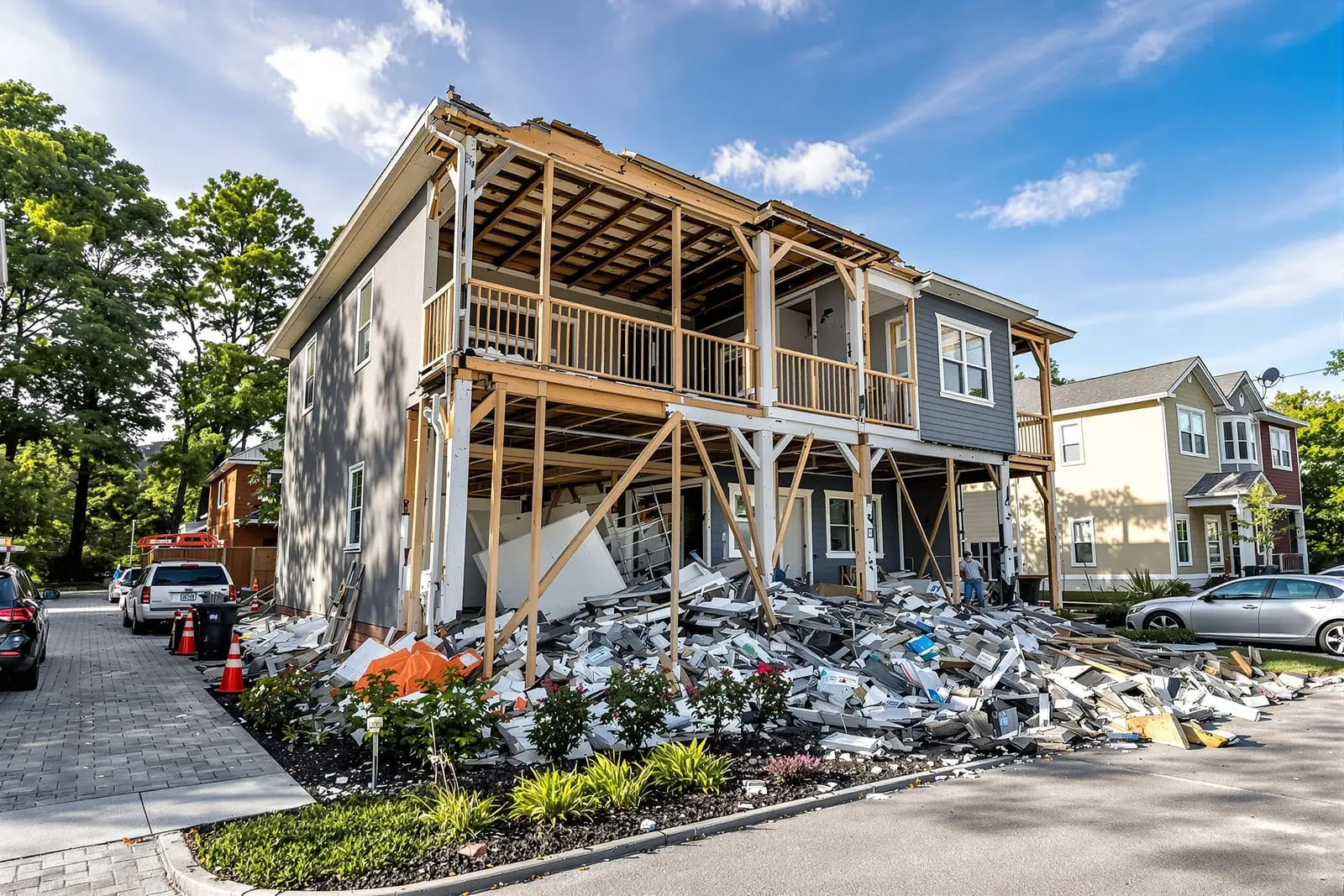
We respond quickly with emergency and disaster commercial demolition services in Denver, CO when facilities are damaged or unsafe. Our team stabilizes or removes compromised structures, clears debris, and works with insurers and officials. Protect the public and restore operations faster with experienced emergency demolition support.
Wrexo Demolition Denver provides professional emergency commercial demolition throughout Denver, CO and the surrounding area. Our licensed, insured crew delivers safe, clean, on-time work with a free estimate before anything begins. Call (720) 315-7877 or request your free quote.
24/7 Emergency Commercial Demolition in Denver When Your Building Cannot Wait
When a fire, flood, vehicle impact, or structural failure hits your commercial property, you do not have days to decide what to do. You need a crew that can stabilize, clear, or remove dangerous sections quickly so nobody gets hurt and you can start rebuilding. Wrexo Demolition Denver focuses on emergency commercial demolition for properties across the Denver metro, including downtown office buildings, older brick retail strips along Colfax, light industrial spaces in North Denver, and newer mixed use properties.
Emergency commercial demolition starts with one critical step: getting eyes on the structure as fast and as safely as possible. When you call Wrexo Demolition Denver, we ask for photos or video if you can safely provide them, along with details like the building type, age, utilities on site, and what kind of damage occurred. This lets us roll a properly equipped crew, not just whoever happens to be close.
On scene, our first priority is life safety. We coordinate with Denver Fire, building owners, and on site facility staff to confirm that the area is cleared of occupants and that utilities are controlled. For commercial properties in the city, this often means verifying gas shutoff with Xcel, locking out main electrical panels, and confirming no one is inside damaged tenant spaces or mechanical rooms. Only after those steps do we move into structural assessment and actual demolition work.
How Emergency and Disaster Commercial Demolition Actually Works
Emergency commercial demolition is not the same as a planned teardown. It is controlled removal of damaged, unstable, or contaminated sections so the rest of the structure or site can be made safe. Wrexo Demolition Denver follows a repeatable process that fits Denver building conditions and local code.
1) Rapid structural assessment: Our superintendent or structural partner evaluates which portions of the building are unsafe. In older brick buildings in areas like Baker or Five Points, we look closely at parapet walls, unreinforced masonry, and fire damaged floor joists. In tilt up concrete or steel frame warehouses in Commerce City or near I 70, we check for cracked panels, buckled columns, and twisted roof members.
2) Create a confined demolition plan: Even in a rush, we define a very specific target area to remove. For example, we might shore a fire wall, then selectively demolish a collapsed roof bay above a restaurant kitchen, or peel away a buckled masonry façade that is shedding bricks onto the sidewalk. The plan covers what to remove, what must stay, fall zones, debris routes, and equipment placement.
3) Stabilization and shoring: Before we tear anything out, we often install temporary shoring. This can mean adjustable steel posts under sagging beams, wooden cribbing stacks under equipment, or bracing for loose masonry at upper stories. Stabilization is what lets us remove the most damaged section without causing a secondary collapse.
4) Controlled removal: Using excavators with grapples or buckets, skid steers, saws, and manual crews, we take down damaged materials in small, manageable bites. We avoid pulling or yanking that could transfer loads to still sound areas. On tight downtown Denver sites, we may hand strip interior partitions and mechanical systems before bringing in machinery, just to keep vibrations and movement to a minimum.
5) Segregation and disposal: Debris is sorted on the fly as much as conditions allow. Concrete and brick go in one stream, metal in another, general debris in a third. Hazardous materials like asbestos or lead coated components are staged separately under containment rules. We haul everything to approved Denver area facilities and document disposal for your insurer or lender.
6) Turnover and documentation: Once the emergency demolition work is complete, we provide a clear boundary of what was removed, what remains, photo documentation, and, if needed, letters for your adjuster or engineer describing stability of remaining structures. This shortens claim disputes and helps your rebuild team move faster.
What Drives Cost and Timeline for Emergency Commercial Demolition in Denver
No two emergency jobs cost the same, and it is not just about square footage. Wrexo Demolition Denver is up front about the factors that change your price and schedule so you can have real expectations when you talk to your insurer, bank, or tenants.
Access and location: A strip center set back from Federal Boulevard with big parking lots is faster and cheaper to work on than a zero lot line brick building on a busy downtown corner with overhead lines and constant foot traffic. Tight urban sites may require night work, lane closures, and smaller equipment, all of which affect the budget.
Building type and age: Older Denver commercial buildings often contain asbestos in flooring, mastic, roofing, or pipe insulation, and lead in paint or coatings. If emergency work touches these materials, we must follow abatement protocols or coordinate with a licensed abatement subcontractor. Newer steel or tilt up concrete buildings usually demo faster but involve heavier sections and larger machines.
Type and extent of damage: A localized kitchen fire that weakened one roof bay is very different from a vehicle impact that knocked out a corner column or a multi story fire that cooked the entire frame. The more the structural load path is compromised, the more shoring, engineering, and phased demolition are needed, which adds time.
Hazard environment: Flood or sprinkler damage can leave saturated drywall, ceilings, and fibrous insulation that pose mold and indoor air risks. Fire scenes may contain unstable mezzanines, chemical residues from firefighting agents, or partially melted plastics. We factor in PPE, decontamination, and, in some cases, air monitoring.
Urgency and work hours: True overnight emergency response with immediate mobilization, overtime labor, and night lighting will cost more than a same week response that starts during standard hours. If the City requires that work happen at specific times to limit noise, that can also stretch the schedule.
Utilities, mechanical, and specialty features: Restaurants, breweries, labs, and manufacturing spaces often have heavy mechanical units on the roof, walk in coolers, process piping, or tanks. Removing or working around these safely can be a significant part of the job. We identify these items early so there are no surprises once machines are on site.
Common Problems in Disaster Demolition and How Wrexo Demolition Denver Handles Them
Emergency commercial demolition jobs in Denver tend to run into the same sets of complications, especially in older corridors and mixed use areas. How your contractor handles those problems often matters more than the machines they bring.
Hidden structural weakness: Fire and long term moisture can destroy connectors, ledger angles, and fasteners that you cannot see from the outside. We assume some hidden damage and proceed by removing loads gradually. We will often cut and peel back roof layers one strip at a time rather than trying to yank an entire section. When conditions are uncertain, we bring in a structural engineer familiar with Denver codes and snow load requirements.
Asbestos and regulated materials: Even in an emergency, the City and State expect you to handle asbestos correctly where practical. In a partial collapse, we may not be able to sample every area before making it safe, but we can still isolate suspect materials, wet them to control dust, and stage debris for later testing and sorting. Wrexo Demolition Denver works with licensed abatement firms when full abatement is needed before or during demolition.
Shared party walls and neighboring properties: Many Denver commercial properties share walls with neighboring businesses. If a fire or impact affects a party wall, demolition can easily create disputes if handled carelessly. We document existing cracks and conditions, use vibration limited methods like saw cutting and selective hand demolition where the risk is high, and keep adjoining owners informed through you or your property manager.
Traffic and public exposure: On commercial corridors like Broadway or Colorado Boulevard, debris and unstable façades pose real risks to the public. We set up barricades, fencing, and debris nets as needed to protect sidewalks and travel lanes, coordinate with Denver Public Works for lane or sidewalk closures when necessary, and stage material handling so trucks are not backing blindly into live traffic.
Insurance and documentation snags: After a disaster, your insurer may push for proof that only necessary demolition was performed. We log what we remove, where it came from, and why it was unsafe to leave. This includes photo sequences, notes on structural conditions, and load tickets. Having this paper trail often speeds claim approvals and cuts down on debates over “unnecessary demolition.”
Choosing the Right Denver Partner for Emergency Commercial Demolition
In an emergency, it is easy to say yes to the first contractor who shows up. Before you commit, there are a few things every Denver commercial owner or manager should check, and Wrexo Demolition Denver is set up with these items in place.
Licensing and local experience: Verify that your demolition contractor is licensed for commercial work and has substantial experience with your type of property. Handling a downtown high rise shell is different from clearing a single story neighborhood retail building. Ask for examples of past emergency response projects, not just planned teardowns.
Coordination with your team: Emergency commercial demolition almost always involves insurers, restoration contractors, engineers, and sometimes tenants with business interruption concerns. We treat our role as part of a bigger recovery plan. That can mean sequencing work so your restoration company can start drying non structural areas while we remove unsafe sections, or leaving certain elements in place temporarily for adjuster inspections.
Safety and communication: In disaster conditions, things change by the hour. You should expect written or at least clearly documented safety plans, site briefings, and a single point of contact who updates you as decisions are made. At Wrexo Demolition Denver, the superintendent you meet on day one is the same person you call with questions until the last load leaves the site.
Understanding your priorities: Not every emergency demolition is about wiping everything out. Sometimes your goal is to save as much of an historic façade as possible, or to protect an undamaged tenant so they can reopen fast. Other times, the priority is to clear a collapsed section that threatens a public sidewalk. We shape scope around those priorities and explain tradeoffs in plain language so you can make informed calls.
If your Denver commercial property has just suffered fire, flood, impact, or structural damage and you need emergency commercial demolition, you can reach out any time. We will walk you through what can be stabilized, what needs to come down, how long it will likely take, and what documentation your insurer will look for so you can move from disaster toward rebuilding with fewer surprises.
“
Professional emergency and disaster commercial demolition, done right the first time, quality materials, honest pricing, and results that last.
Wrexo Demolition Denver
Emergency and Disaster Commercial Demolition Across Our Service Area