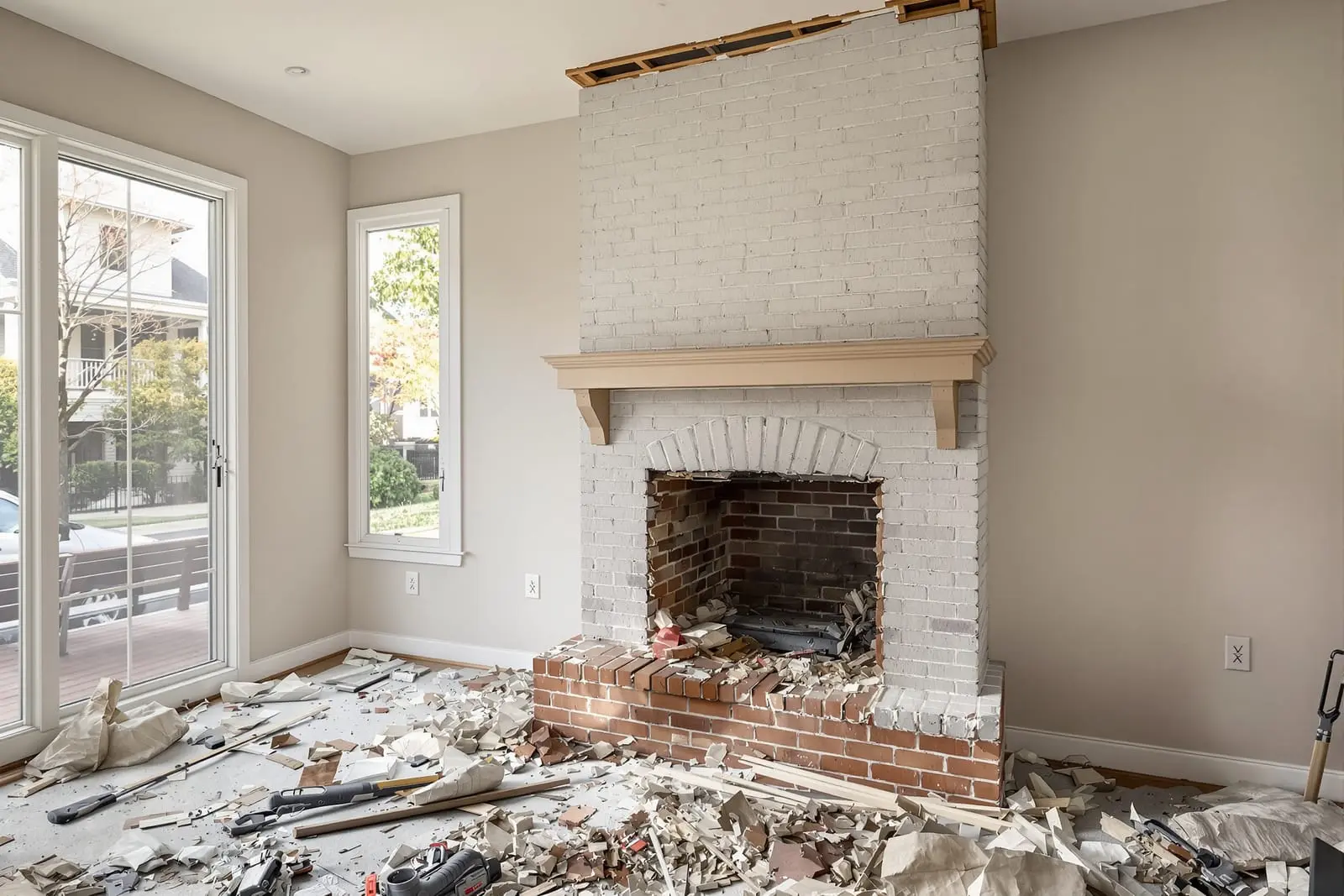
We perform careful chimney and fireplace demolition in Denver, CO to eliminate leaks, structural issues, or unused fireplaces. Our team dismantles masonry from roofline to foundation or removes interior fireplaces while protecting surrounding finishes. Enjoy improved safety and design flexibility with professional chimney removal.
Wrexo Demolition Denver provides professional chimney demolition throughout Denver, CO and the surrounding area. Our licensed, insured crew delivers safe, clean, on-time work with a free estimate before anything begins. Call (720) 315-7877 or request your free quote.
Chimney Demolition in Denver Homes and Businesses
Old chimneys in Denver are more than just outdated features. They can leak, shift with freeze-thaw cycles, and create real safety issues in our climate. Wrexo Demolition Denver offers chimney and fireplace demolition that is tailored to local building conditions, from brick stacks on 1920s bungalows in Park Hill to tall masonry chimneys on newer builds in Highlands Ranch.
When you call us about chimney demolition, we start with an on-site visit. We look at how the chimney is tied into the roof framing, whether it is structural or decorative, what type of masonry or prefab system you have, and how close it sits to neighbors, alleys, and shared walls. This lets us give you straight answers on cost, schedule, and what kind of repairs you will need after demolition.
Our focus is to remove unsafe or unwanted chimneys while protecting everything around them. That means planning how we will protect your roof, manage dust inside your home, and keep debris contained on tight Denver city lots. You get clear communication about each step so you know what the home will look like both during and after removal.
Our Step-by-Step Chimney and Fireplace Removal Process
Every chimney demolition project with Wrexo Demolition Denver follows a structured process so there are no surprises.
1) Assessment and planning: We confirm whether the chimney is full masonry, brick over a metal flue, or a factory-built unit. We check the attic and basement to see where the flue runs, identify shared structural supports, and note gas lines or electrical near the firebox. For multifamily buildings, we coordinate with property managers and sometimes neighbors to understand shared walls and utilities.
2) Permits and scheduling: In Denver and most nearby jurisdictions, full chimney removal that affects the roof line or structural walls typically requires a building permit. We help you determine which city or county department is responsible and can coordinate with your general contractor if one is involved. We schedule work to avoid conflicts with roofing or HVAC crews so the opening in your roof or wall stays exposed for as little time as possible.
3) Site protection: Before any demolition begins, we put down floor protection, cover nearby furniture, and seal off work areas with plastic sheeting where practical. Outside, we protect landscaping and set up debris chutes or scaffolding if the chimney is taller than a single story.
4) Top-down demolition: We always work from the top down, removing caps and bricks or stone in manageable sections. For wood-framed chases and prefabricated systems, we remove siding and sheathing in layers, then take out the metal pipe and framing. This controlled approach avoids shock loads to the structure and prevents bricks from sliding down and damaging the roof.
5) Interior firebox and hearth removal: Once the stack is lowered, we move inside to remove the firebox, damper, smoke shelf, and hearth. We cut or carefully break apart masonry, then haul debris directly to our truck or dumpster to keep dust down. If the fireplace is on a shared wall, we preserve that wall framing so the adjoining room stays intact.
6) Clean up and handoff: After the chimney demolition is complete, we broom clean the work area and leave roof and wall openings framed or temporarily covered, depending on your plan. We provide photos and notes so your roofer or mason knows exactly what was removed and where.
Interior vs Exterior Chimney Demolition Options
Not every homeowner in Denver needs a full chimney demolition from foundation to roof. Wrexo Demolition Denver can tailor the scope based on how you plan to use the space and your budget.
Interior removal only: In some cases, a homeowner wants the fireplace, hearth, and interior stack removed to gain floor space, but prefers to leave the exterior brick chimney in place for aesthetics. We can remove the firebox, flue sections, and interior masonry, cap the exterior portion properly, and insulate and close the interior wall opening. This can be less expensive but still requires careful structural review.
Partial removal to roofline: For homes preparing for a new roof, many clients choose to remove the chimney down to just below the roof deck, then have their roofer frame and shingle over the opening. This option eliminates leaks around flashing and can improve energy efficiency while avoiding the cost of full foundation removal.
Full removal to foundation: If the chimney is actively failing, leaning, or occupying space where you plan to remodel, full removal is safer and more flexible. This means breaking out the footing or slab section that supports the chimney, then backfilling or prepping the area for new construction. We coordinate carefully to avoid disturbing nearby foundations, basements, or crawl spaces that are common in older Denver homes.
Prefab system removal: Many late-20th-century homes use metal flues and framed chases instead of solid masonry. Removal often involves cutting back siding, taking out structural members that support only the chase, and safely disconnecting gas lines and power to blowers. This work is usually faster but demands coordination with licensed plumbers or HVAC contractors when gas lines are present.
Permits, Codes, and Safety in Denver and Nearby Cities
Local permitting and code requirements matter when you remove a chimney or fireplace. Wrexo Demolition Denver is familiar with how Denver, Aurora, Lakewood, Arvada, and surrounding municipalities approach this kind of work, although final decisions always rest with the specific building department.
In Denver, chimney demolition that alters the roof line, fire-resistance rating of a wall, or structural framing typically needs a building permit under the adopted International Residential Code and International Building Code. If you are already working with a general contractor, they usually pull the permit, and we support their documentation with photos and written scope descriptions. For smaller interior-only fireplace removals that do not affect structure, your city may not require a permit, but we recommend checking before work begins.
Gas and wood-burning appliances must be properly decommissioned. This usually means a licensed plumber or HVAC technician caps gas lines and confirms there are no active connections left behind. We coordinate this scheduling so lines are safe before demolition begins. For multifamily or commercial properties, you may also face fire marshal reviews or additional inspections.
Safety on site is handled with the same seriousness as paperwork. We use proper fall protection when working on pitched roofs, set up debris exclusion zones, and, when needed, post sidewalk warnings in busy Denver neighborhoods. For older buildings where asbestos-containing materials or lead paint could be present near the chimney, we help identify when testing or specialized abatement is needed before standard demolition can proceed.
What Affects the Cost of Chimney Demolition
Homeowners often ask why chimney demolition prices can vary so much between houses that look similar from the street. Wrexo Demolition Denver walks you through the specific cost drivers for your project rather than giving generic square-foot prices.
Height and access: A single-story chimney with level yard access will usually be less expensive than a tall two or three story stack that requires scaffolding, lifts, or complex debris handling. Tight Denver lots with limited side yard access can slightly increase labor because debris must be moved by hand instead of with equipment.
Construction type: Solid brick or stone chimneys are heavier and take more time to dismantle than thin brick over framed chases. Reinforced concrete or heavily reinforced fireboxes, more common in some mid-century homes, can also require more specialized tools and time.
Scope and finish: Removing only the above-roof portion of a chimney costs less than taking out the entire system down to the footing. Costs also change depending on how you want the opening finished. For example, preparing for a new gas insert, closing the opening for a solid wall, or leaving framing exposed for a remodel all affect the amount of work.
Disposal and recycling: Masonry debris is heavy and Denver-area disposal sites charge by weight. We separate clean brick and metal where practical so some material can be recycled, which can slightly reduce tipping fees. We include hauling and disposal in our estimates so you are not surprised by add-on dump charges.
Permits and coordination: If your project requires multiple inspections, engineer letters, or coordination with other trades like roofers and plumbers, we factor that extra time into the proposal. Our goal is to present a clear, itemized scope so you understand how each decision affects the total price.
Common Problems and How Wrexo Handles Them
Chimney and fireplace demolition can expose hidden conditions. Wrexo Demolition Denver focuses on anticipating these issues and dealing with them transparently if they arise.
Hidden structural support: Some older Denver homes use chimney mass as part of the lateral bracing or as informal support for nearby framing. During the assessment we look for joists or rafters that bear into the chimney. If we find support that needs to remain, we can coordinate with your contractor or an engineer to install headers, posts, or other framing before we remove masonry.
Shared flues or combined systems: In duplexes and small apartment buildings, chimneys sometimes serve more than one unit. We verify whether multiple appliances share a flue before demolition. If they do, we help plan a sequence so no unit is left without proper venting during or after removal.
Moisture and rot: Once the chimney is opened, we sometimes find rotted framing, mold, or long-term water damage around the opening. Rather than covering it up, we document conditions with photos and measurements so your contractor, roofer, or homeowner can decide on repair scope. Fixing these issues while the area is open is usually more efficient.
Dust and interior disruption: Chimney demolition can be dusty, especially when removing older fireboxes and liners. We use localized containment, negative air setups when practical, and staged debris removal through exterior doors or windows to keep dust out of the rest of your home. Before we start, we explain exactly what rooms will be affected, so you can move belongings or plan to be out of the house if you prefer.
HOA and neighbor concerns: Many Denver neighborhoods and condo buildings have exterior appearance guidelines. If you live in an HOA-controlled community, we can provide written descriptions and simple sketches of what will change on the exterior so you can submit them for approval. On tight lots or row homes, we also plan work hours and access routes that respect your neighbors' parking and noise concerns.
Why Local Experience Matters for Chimney Demolition
Chimney and fireplace demolition is not just about knocking down brick. It is about understanding how Denver homes are built, how our weather affects masonry, and how local inspectors and HOAs approach these changes. Wrexo Demolition Denver is locally focused and has hands-on experience with the specific housing stock in districts like Washington Park, Berkeley, Green Valley Ranch, and nearby suburbs.
When you work with us, you get a team that already expects attic spaces to be tight in older bungalows, knows that winter scheduling can affect roof work, and understands the difference between removing a chimney on a single-family home versus a Capitol Hill condo building. We talk through your long-term plans, whether that means converting to a modern gas unit, reclaiming floor space, or simplifying the roof for solar.
Our goal is to leave you with a safe, code-compliant structure and a clear path for whatever comes next in your project. From the first site visit to the final cleanup, you get direct communication and detailed documentation so you and your other contractors can move forward confidently after the chimney demolition is complete.
“
Professional chimney and fireplace demolition, done right the first time, quality materials, honest pricing, and results that last.
Wrexo Demolition Denver
Chimney and Fireplace Demolition Across Our Service Area