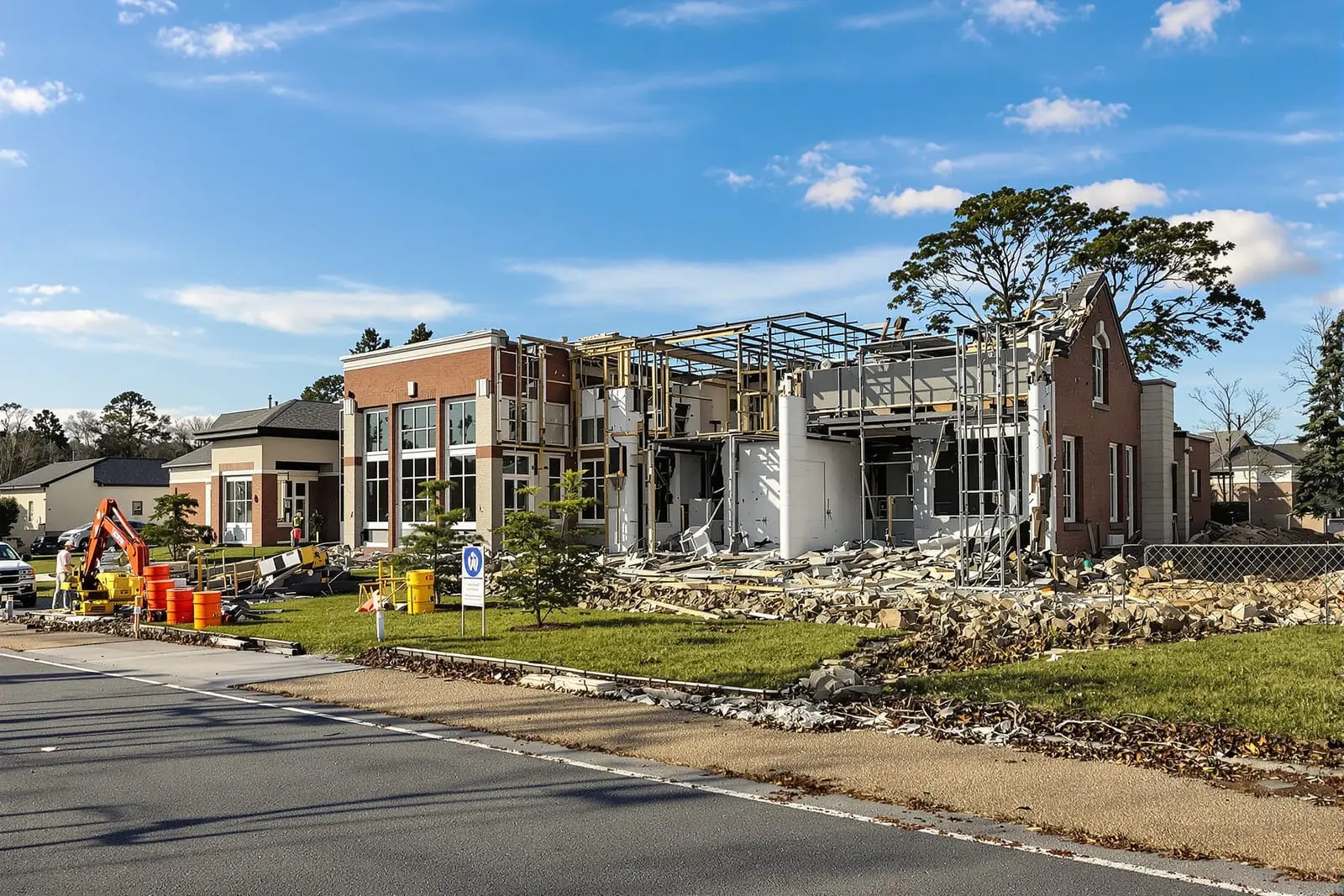
We provide school and institutional demolition in Denver, CO for aging classrooms, gyms, and campus buildings. Our team coordinates around academic schedules, security needs, and public safety while performing structural and interior demo. Districts and agencies rely on our organized, compliant demolition services.
Wrexo Demolition Denver provides professional school demolition throughout Denver, CO and the surrounding area. Our licensed, insured crew delivers safe, clean, on-time work with a free estimate before anything begins. Call (720) 315-7877 or request your free quote.
Specialized School Demolition in Denver, Done Methodically
School and institutional demolition is different from knocking down a house or a warehouse. Wrexo Demolition Denver plans every project around safety for students and staff, protection of neighboring properties, and strict compliance with education and public facility regulations.
For K-12 campuses, universities, and public institutions in Denver, we sequence work to fit academic calendars and community needs. That often means heavy demolition during summer or winter break, with quieter activities like interior prep and selective demolition during off-hours in the school year.
We start with a detailed structural review of your buildings, existing plans, and any past renovations. Many Denver schools were built or added onto in the 1950s to 1980s, so materials like asbestos, lead paint, and PCB-containing components are common. We coordinate environmental surveys and factor abatement into a realistic demolition schedule, instead of treating it as an afterthought.
From small classroom wing removals to full campus teardowns, Wrexo Demolition Denver tailors methods to match your facility type, occupancy needs, and long-term redevelopment plan.
Our Process for Safe, Compliant Institutional Demolition
A typical school demolition with Wrexo Demolition Denver follows a clearly defined sequence so administrators, facilities staff, and stakeholders always know what is happening and why.
1. Preconstruction planning and permitting: We review your site plan, utility maps, and structural drawings, then coordinate with the City and County of Denver, local fire authorities, and your school district or institutional owner. Permits for demolition, dust control, and public right-of-way use are secured before any physical work begins.
2. Environmental assessment and abatement coordination: If your facility has asbestos, lead, or other hazardous materials, we work alongside licensed abatement contractors. Demolition does not start until clearance tests confirm it is safe, which helps you avoid stop-work orders and change orders.
3. Utility verification and disconnects: Hidden live utilities are a serious risk in older schools. We confirm shutoffs with each provider, physically verify disconnections when possible, and maintain lockout/tagout procedures before machines touch the structure.
4. Soft strip and selective interior demolition: We remove doors, cabinetry, lockers, ceiling tiles, mechanical units, wiring, and reusable fixtures first. This step lowers disposal costs, improves recycling, and protects items you may want to salvage for reuse in other district buildings.
5. Structural demolition: Using excavators with concrete pulverizers, shear attachments, and high-reach booms where needed, we systematically take down structures from the top down. We control fall zones and sequence the work to protect adjacent active buildings, playgrounds, or streets.
6. Debris handling and site management: Material is sorted on site into concrete, metals, wood, and trash. We schedule truck routes to avoid student drop-off routes and peak neighborhood traffic, and we clean staging areas daily so the site does not become a nuisance.
7. Final grading and turnover: Once structures are removed, we rough or fine grade according to your upcoming construction plans. We can leave utility stubs marked and coordinate with your general contractor to maintain project momentum into the new build phase.
Cost Factors for School Demolition in Denver
Demolition budgets for schools and institutions vary widely, and understanding the drivers helps you plan bond funds or capital budgets more accurately.
The largest cost variable is environmental abatement. Older Denver schools with asbestos flooring, pipe insulation, or sprayed fireproofing will often require significant pre-demolition abatement, which can equal or exceed the structural demolition cost. Wrexo Demolition Denver helps you isolate what belongs in abatement contracts versus demolition so bids are apples to apples.
Structure type and construction method also matter. A one-story CMU classroom wing with wood roof framing is faster to demolish and process than a multi-story reinforced concrete classroom tower or lab building. Heavy structural steel, post-tensioned slabs, and dense rebar increase equipment time and disposal weights, which directly impacts price.
Site constraints are a third major driver. If we can stage equipment and roll-off containers in an open parking lot with direct street access, labor and trucking hours go down. Tight urban campuses near Cap Hill or downtown Denver, with limited access and noise restrictions, require more careful sequencing and possibly smaller equipment, which extends the schedule.
Finally, your schedule and phasing strategy influence cost. Compressing all work into a short summer window may require longer days, additional crews, or parallel equipment sets. In some cases, phased demolition over two summers plus one winter break is more economical and easier on the community. We walk you through multiple scenarios with transparent line items so you can select the best balance of speed and cost.
Managing Safety, Noise, and Disruption Around Active Campuses
School demolition often happens only a fence away from functioning classrooms, offices, or athletic fields. Wrexo Demolition Denver’s planning focuses on keeping your community safe and informed while work stays on schedule.
We design site-specific safety plans that include fencing, signage, and controlled access points. Staff, students, and visitors are kept entirely out of demolition zones, with clear detour routes. For Denver campuses that share space with community centers, charter schools, or childcare facilities, we coordinate joint access plans so emergency routes remain open at all times.
Noise and vibration are common concerns, especially near testing periods or special events. We schedule the loudest activities, such as slab breaking and steel cutting, during off-hours when possible. For sensitive operations like hospitals, research labs, or music schools, we can perform trial runs with vibration monitoring and adjust methods or sequencing based on the data.
Dust control is especially important in Denver’s dry climate. We use water spray systems, mist cannons, and on-site street sweeping to keep dust within regulatory limits. In windier seasons, we modify daily activities to match conditions, focusing on interior or low-dust tasks on high wind days.
Finally, communication is part of disruption management. We can participate in community meetings, provide clear schedules for your parent newsletters and email lists, and give facilities teams a single point of contact to answer questions quickly.
Environmental Responsibility and Material Recycling
Most school demolitions in Denver generate high volumes of concrete, brick, and metal. Wrexo Demolition Denver structures projects to keep as much of this material as possible out of landfills and to support sustainable redevelopment goals.
Concrete and masonry from gymnasiums, classroom wings, and utility buildings are typically processed and sent to local recyclers who crush it into base material. This recycled aggregate can be reused as subgrade for new school facilities, parking lots, or city infrastructure projects. Planning this early can even reduce your future sitework costs if your new construction team chooses to use the recycled product.
Structural steel, rebar, copper, and aluminum from mechanical systems and IT infrastructure are separated and sent to metal recyclers. Older institutional buildings often contain substantial steel tonnage in roofs, floor framing, and stair systems. Efficient separation helps offset overall project costs.
Many districts want to salvage specific architectural elements for historical or community reasons. That might include gym flooring, auditorium seating, decorative brick, or entry signage. We work with your facilities and design teams to identify salvage targets before demolition starts, then adjust sequences so those items are removed safely and stored properly.
In some cases, selective deconstruction of particular areas can achieve LEED or other sustainability credits for the replacement project. We can provide documentation on material quantities, landfill diversion rates, and recycling destinations to support your design and construction teams.
Project Planning, Phasing, and Best Timing in Denver
For Denver schools and institutions, timing demolition is just as important as selecting the right contractor. Wrexo Demolition Denver helps you align academic calendars, funding approvals, and construction milestones into a workable plan.
Summer break is the most common demolition window for K-12 campuses, but even an 8 to 10 week gap can be tight for a full building removal plus site prep. We often recommend starting permitting, environmental surveys, and soft strip work months beforehand while classes are still in session, focusing on low-impact tasks done after hours or in sealed areas.
Winter break and spring break can be used for targeted milestones, such as utility reroutes, partial structure removal, or interior demolition that prepares the building for a faster summer mobilization. For higher education or year-round institutions, we study enrollment patterns, key events, and campus traffic to choose phases that minimize disruption.
Denver’s climate is generally workable year-round, but cold snaps, snow, and spring storms can affect productivity. Heavy concrete and steel work is typically more efficient in late spring through early fall, while planning, selective interior work, and smaller-scale tasks fit well into winter. We build realistic schedules that account for local weather patterns, inspection lead times, and material hauling windows.
Early collaboration between your architect, general contractor, and Wrexo Demolition Denver can compress the overall project timeline. For example, we can coordinate pad-ready turnover dates so new construction can start on one area of the site while demolition continues elsewhere, if your layout allows.
Public agencies, private schools, and universities in the Denver area need a demolition partner that understands both technical demands and public accountability. Wrexo Demolition Denver brings institutional experience, transparent communication, and a methodical safety culture to every project.
We are familiar with coordination requirements for school districts, city departments, and state agencies, and we build those approvals into our planning. Our teams are used to working under the oversight of construction managers, owner’s reps, and design teams, and we welcome third-party inspections and audits.
From the first site walk, we focus on your long-term plan. Whether your goal is a new STEM wing, a full campus modernization, or a complete change of use for an institutional property, we tailor demolition scope and sequencing to support it. That includes preserving utilities that serve remaining buildings, protecting trees or fields that will be reused, and leaving subgrade conditions that match your geotechnical and civil plans.
If you are planning school demolition anywhere in the Denver metro area, Wrexo Demolition Denver can provide preliminary budgets, feasibility input, and clear schedules so you can move from planning to execution with confidence.
“
Professional school and institutional demolition, done right the first time, quality materials, honest pricing, and results that last.
Wrexo Demolition Denver
School and Institutional Demolition Across Our Service Area